The Evolution Beyond Intel’s 486 Processor
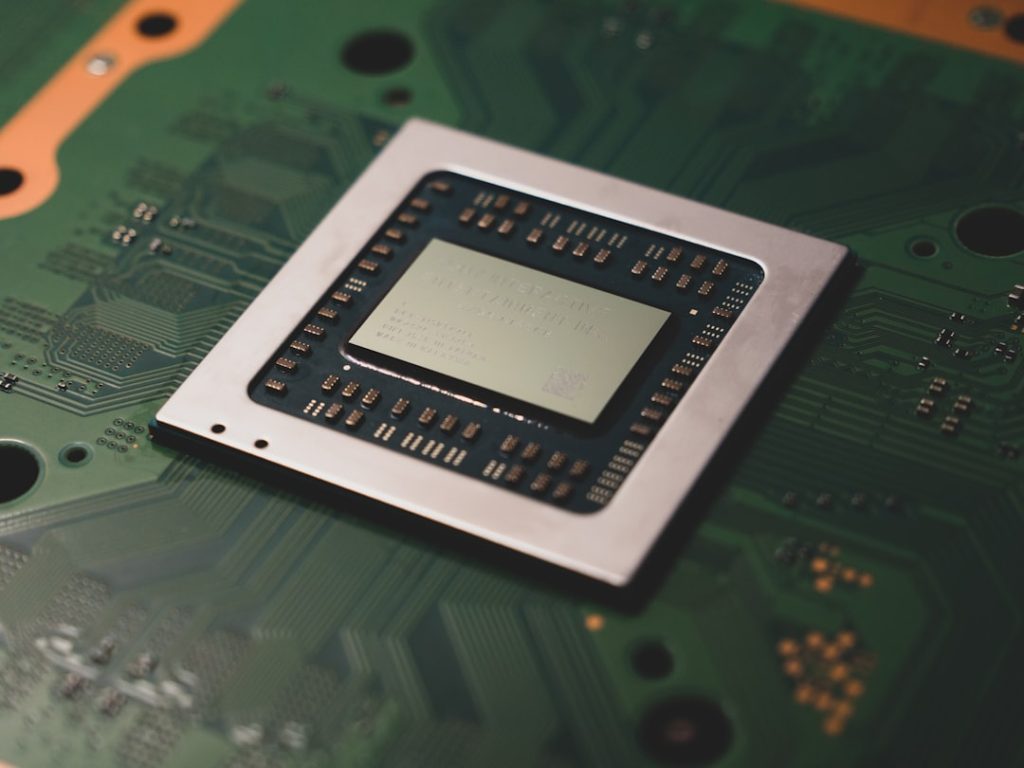
Before the 1990s, computer processors were identified solely by part numbers and clock speeds rather than brand names. Manufacturers typically abbreviated these part numbers for convenience. The 486, officially designated as the 80486, marked the end of this era because Intel couldn’t secure trademark protection for numerical designations, prompting the question of what would succeed this influential chip.
Intel introduced the Pentium processor on March 22, 1993, as the direct successor to the 486. However, multiple manufacturers produced 486-compatible processors, and several of these companies, including AMD and Cyrix, developed their own next-generation alternatives.
Intel’s Transition to Pentium Technology
The first-generation Pentium processors featured enhanced front-side bus architecture compared to their 486 predecessors and required different socket configurations. Intel did manufacture a Pentium Overdrive variant designed for specialized 486 sockets with additional pin configurations. This transitional design incorporated Pentium core technology while maintaining the slower 486 bus architecture, resulting in modest performance improvements.
Genuine Pentium processors delivered approximately 40% better performance than equivalent-speed 486 chips. Initial Pentium models operated at 60 and 66 MHz frequencies, matching the fastest 486 processors available at launch. While Intel eventually produced 100 MHz 486 variants, Pentium speeds had already advanced to 120 and 133 MHz by that time. The original Pentium series ultimately reached 200 MHz, with the Pentium MMX variant achieving 233 MHz.
Intel maintained exclusive control over this post-486 market segment for roughly three years. Without this monopoly, the notorious Pentium FDIV mathematical error would have posed catastrophic consequences for the company.
The Strategic Importance of Processor Branding
Intel experienced limited success preventing competitors from manufacturing chip clones and completely failed to stop them from adopting Intel’s numerical naming conventions to indicate functional compatibility. Consequently, Intel never released a processor designated 80586, which would have logically followed the highly successful 80486. Instead, Intel assigned the internal codename P5 to its 486 successor and marketed it under the trademarked Pentium brand. This name referenced the number five while providing complete legal protection, unlike the numerical designation 586.
Competing manufacturers also planned to develop 586-class processors, believing they could undercut Intel’s substantial profit margins while maintaining reasonable profitability. Initially, these companies adopted similar numerical naming schemes, but this approach proved unsustainable long-term. Both Intel and its competitors recognized this limitation, leading to market confusion that persists today.
The situation differed significantly from Motorola, another major processor manufacturer of the era, which didn’t face widespread cloning of its designs. Intel’s unique circumstances stemmed from specific historical factors.
The Origins of 486 Competition and Intel’s Response
At least seven companies manufactured 486-compatible processors using that designation. This proliferation traced back to IBM’s original specifications for the first IBM PC, which required multiple suppliers to ensure adequate production capacity if Intel encountered manufacturing difficulties. Consequently, Intel licensed production rights for the 8088, 8086, and 80286 processors to various companies to satisfy IBM’s requirements. Eventually, IBM itself obtained licensing rights to manufacture Intel processors.
The landscape shifted with the 386 processor. IBM initially resisted producing 386-based PCs, preferring to maintain clear distinctions between personal computers and their more powerful System/38 minicomputers, predecessors to the AS/400 and current System i series.

Without IBM contracts mandating multiple sources, Intel chose not to license 386 technology broadly. Intel believed its manufacturing capacity could meet market demand without requiring additional suppliers, and no other company possessed sufficient influence to demand secondary sourcing arrangements.
AMD’s Competitive Strategy with 386 and 486 Processors
AMD, a longtime Intel licensing partner, decided to transition from supplier to competitor. Without complete Intel cooperation for 386 production, AMD utilized knowledge from previous licensing agreements and reverse-engineered remaining components to create highly compatible 386SX and 386DX clones without Intel’s authorization. This led to mutual litigation lasting five years, ultimately resulting in court decisions permitting AMD to manufacture its 386 processors.
AMD subsequently applied the same approach to 486 development. While AMD’s 486 remained a close clone, Intel secured some legal concessions regarding AMD’s premium 486 variants. AMD could utilize the instruction set and pin configurations, but courts required lower operating voltages, protecting Intel’s lucrative upgrade market. Despite this limitation, Intel had to share 486 market share with AMD, and while most premium PC manufacturers remained with Intel, companies like Compaq and Acer incorporated AMD chips into select systems. AMD even developed a 66 MHz 486SX2 specifically for Compaq.
AMD achieved significant success in the generic PC market, with motherboard manufacturers incorporating jumper settings to accommodate both AMD and Intel voltage requirements.
However, the 486 represented the conclusion of this cloning strategy for AMD. Future processor development would require original AMD designs rather than Intel derivatives.
Other 486 Competitors and Their Outcomes
Intel successfully prevented UMC from continuing 486 clone production through litigation. UMC, primarily a motherboard chipset manufacturer seeking CPU market expansion, violated Intel’s memory management patents without viable workarounds.
IBM manufactured processors based on both Intel’s 386 and 486 architectures for internal use while paying Intel royalties under agreements established in April 1989. These arrangements prohibited IBM from selling CPUs separately, though motherboard sales were permitted. Ironically, IBM’s 66 MHz 486SLC2 became popular in generic PC clone motherboards. IBM’s Intel-derived processors typically included limitations making Intel’s versions more attractive, forcing IBM into unfamiliar off-brand pricing positions.
IBM could produce exact Intel CPU copies bearing Intel branding with IBM manufacturing indicators. Intel required IBM to purchase specific quantities of Intel-manufactured processors for every self-produced unit, resulting in many IBM PCs containing standard Intel processors.
Not all IBM 486 processors derived from Intel technology. IBM also manufactured chips for Cyrix, retaining portions of production yields for open market sales rather than internal use.
Unlike AMD’s approach, Cyrix developed original 486 designs. Early Cyrix 486 processors were 386/486 hybrids, but later 486SX and DX models achieved Intel pin compatibility. While performance typically lagged 10% behind equivalent AMD or Intel processors, Cyrix circumvented patent restrictions by utilizing manufacturing partners with Intel cross-licensing agreements. Consequently, 486 processors bearing TI, SGS-Thompson, or IBM branding often contained Cyrix designs, alongside chips with Cyrix’s own branding.

Cyrix and manufacturing partners primarily served low-tier clone markets without attracting major manufacturers like Compaq.
Alternative Pentium-Class Successors
Both AMD and Cyrix produced processors designated 5×86. AMD’s version was essentially an enhanced 486 with increased cache memory and higher clock multipliers. These chips utilized 486 motherboards with slower memory buses, delivering Pentium-class performance where a 133 MHz AMD 5×86 performed comparably to a 90 MHz Pentium.
Cyrix’s 5×86 employed hybrid architecture combining 486 bus compatibility with Pentium-like core technologies. While the 486 bus limited performance, Cyrix processors outperformed equivalent-speed AMD alternatives.
Genuine Pentium-Compatible Processors
Startup company NexGen developed the Nx586 processor using different sockets and chipsets while delivering comparable performance to Intel processors in non-mathematical applications. However, the Nx586 lacked mathematical coprocessor capabilities, essentially functioning as an extremely fast 486SX. While Compaq invested in NexGen and considered using their processors, the missing math coprocessor eliminated viability for first-tier PC manufacturers.
AMD and Cyrix introduced authentic Pentium-class processors in 1996 compatible with Pentium sockets and chipsets. AMD’s processor was designated K5, while Cyrix named their offering 6×86. Cyrix’s sixth-generation performance claims proved problematic because superior performance applied only to integer operations. Pentium processors significantly outperformed in decimal mathematics, including 3D gaming applications. As 3D gaming gained popularity, Cyrix’s market position deteriorated. SGS-Thompson produced limited quantities of 6×86 processors, but IBM manufactured most units, selling their allocation as IBM 6×86 processors functionally identical to Cyrix counterparts.
AMD’s K5 arrived significantly late to market with maximum speeds limited to 133 MHz. AMD acquired NexGen in 1995, and NexGen’s design team subsequently developed AMD’s highly successful K6 processor.
Memory chip manufacturer IDT entered the market with a Pentium clone called C6 or Winchip. Like AMD and Cyrix, IDT couldn’t match Intel’s mathematical performance capabilities. The C6 became a budget processor option, and VIA eventually acquired rights to both IDT and Cyrix CPU technologies. IDT’s design continued in VIA’s x86 processor development.
The Rise MP6 represented another short-lived Pentium clone with minimal 1990s market penetration, though its core technology survives in the Vortex86 processor.
AMD’s Independent Competition Strategy
Following the Pentium II era, Transmeta attempted competition using its Crusoe processor technology, while VIA released a Pentium III-compatible CPU called the C3.
Only AMD successfully continued developing viable Intel alternatives. Technical and legal challenges proved insurmountable for other competitors. While Pentium-class processors shared common buses and chipsets, AMD’s Athlon processor utilized licensed Digital Equipment Corporation bus technology. AMD processors require different chipsets and motherboards than Intel alternatives, eliminating true dual-source compatibility. However, most PC manufacturers now utilize both suppliers, selecting components to achieve specific price targets. Some companies, notably Dell, maintained Intel exclusivity well into the 21st century before eventually adopting mixed-supplier strategies.
Branding confusion persists, but Intel’s adoption of Core i3, i5, i7, and i9 nomenclature prompted AMD to develop corresponding Ryzen 3, 5, 7, and 9 branding schemes indicating targeted performance categories.
Understanding relative performance across chip generations remains as challenging today as during the 486 era, though information accessibility has improved significantly.
Photo by He Junhui on Unsplash
Photo by BoliviaInteligente on Unsplash
Photo by Akshat Sharma on Unsplash