Space-Based Computing Takes Flight as Orbital Data Centers Begin Commercial Operations
While the concept of space-based data centers has generated significant excitement, the reality of computational power in orbit remains limited. However, this landscape is beginning to shift as the first commercial orbital computing services become operational, offering insights into how this emerging industry will develop.
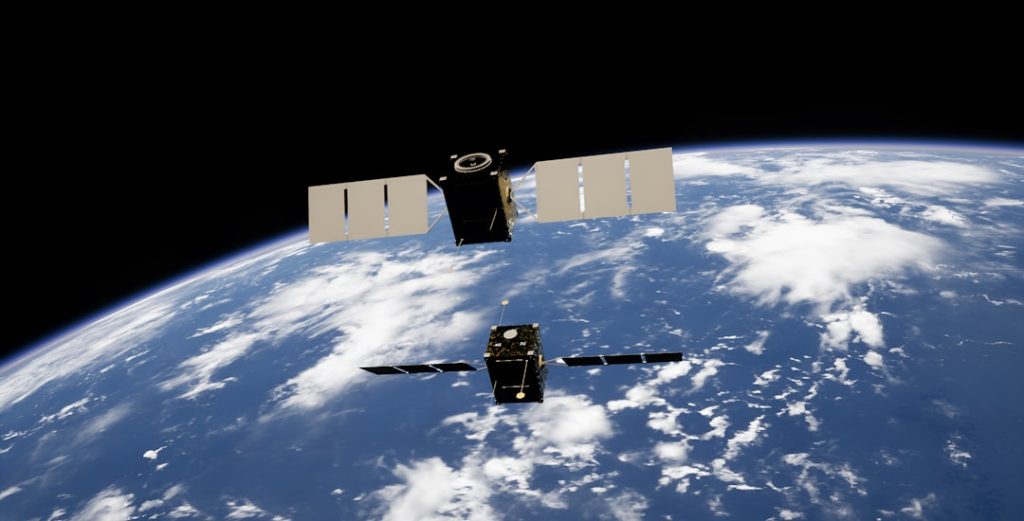
Canadian satellite operator Kepler Communications has established what currently stands as the most substantial computing cluster in orbit, featuring approximately 40 Nvidia Orin edge processors distributed across 10 operational satellites. These spacecraft are interconnected through laser communication systems, creating a networked computing environment beyond Earth’s atmosphere.
The company has secured 18 clients for its orbital computing services and recently announced a partnership with Sophia Space, a startup developing specialized space-based computer systems. This collaboration represents a significant milestone in testing orbital computing capabilities under real-world conditions.
The Path to Large-Scale Orbital Computing
Industry analysts predict that comprehensive space-based data centers won’t emerge until the 2030s. The current focus centers on processing data collected in orbit to enhance the performance of space-based sensors utilized by commercial enterprises and government organizations.

Kepler’s approach differs from traditional data center models. Rather than positioning itself as a space-based data center operator, the company views its role as providing fundamental infrastructure for orbital applications. CEO Mina Mitry explains that their goal is to create a service layer offering network capabilities for satellites in space and aerial platforms operating below.
Addressing Technical Challenges
Sophia Space is tackling one of the most significant obstacles facing large-scale orbital data centers: thermal management. The startup is developing passively-cooled space computers designed to prevent powerful processors from overheating without requiring heavy, expensive active cooling systems that would be costly to launch and maintain in space.
Under their new partnership, Sophia will upload its proprietary operating system to a Kepler satellite and attempt to launch and configure it across six GPUs spanning two spacecraft. This represents the first attempt at such operations in orbit, marking a crucial validation step for Sophia ahead of its planned satellite launch in late 2027.
Strategic Industry Positioning
This collaboration serves multiple strategic purposes. For Kepler, the partnership demonstrates the practical utility of its orbital network infrastructure. Currently, the company processes data uploaded from Earth or collected by payloads on its own spacecraft. As the sector matures, Kepler anticipates expanding to provide networking and processing services for third-party satellites.

Satellite manufacturers are increasingly incorporating this distributed processing model into their future designs, particularly for power-intensive sensors like synthetic aperture radar systems. The U.S. military represents a key market for such capabilities as it develops next-generation missile defense systems that rely on satellites for threat detection and tracking.
Edge Computing in Space: The Near-Term Opportunity
The immediate value proposition for orbital data centers lies in edge processing – handling data at the point of collection for improved response times. This approach distinguishes companies like Sophia and Kepler from major space industry players and well-funded startups focused on large-scale orbital data centers with traditional data center processors.
Mitry advocates for a distributed approach, emphasizing inference processing over training workloads. This strategy prioritizes multiple distributed GPUs optimized for inference tasks rather than single high-powered processors designed for training operations. The goal is to maintain consistent utilization rates, ensuring orbital computing resources operate at full capacity rather than sitting idle.
Regulatory and Market Drivers
Terrestrial regulatory developments may inadvertently accelerate space-based computing adoption. Recent legislative actions, including Wisconsin’s ban on new data center construction and similar proposals at the federal level, could make orbital alternatives increasingly attractive to companies facing Earth-based restrictions.
From my perspective, this development represents a fascinating convergence of technological capability and regulatory pressure. While the technical challenges of orbital computing remain substantial, the combination of advancing space technology and terrestrial regulatory constraints creates a unique market opportunity. The success of these early partnerships will likely determine whether space-based computing evolves from a niche application to a mainstream alternative.
The industry appears to be taking a pragmatic approach, focusing on proven edge computing applications rather than attempting to replicate entire terrestrial data centers in space. This strategy makes sense given current launch costs and technical limitations, but it also positions these companies well for expansion as space infrastructure develops and costs decrease.
Photo by Kevin Stadnyk on Unsplash
Photo by Harrison Broadbent on Unsplash