Historic Lunar Mission Crew Returns Home After Record-Breaking Journey
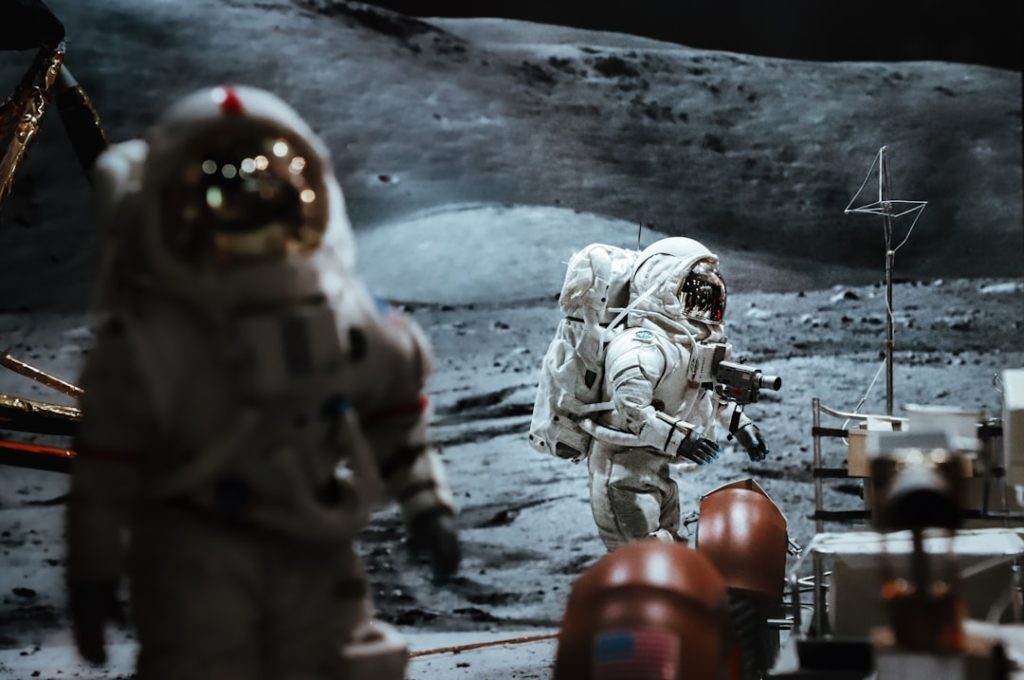
Four astronauts aboard a groundbreaking lunar mission are making their way back to Earth following an extraordinary flyby of the Moon that established a new record for human space travel distance.
The crew experienced a planned 40-minute communication blackout as their spacecraft passed behind the lunar surface, temporarily severing all contact with ground control.
When communications resumed, mission specialist Christina Koch expressed her relief, stating how wonderful it was to reconnect with Earth once again.
Following the blackout, the spacecraft descended to within several thousand miles of the Moon’s surface, providing the crew with a spectacular view of a total solar eclipse as the lunar body obscured the Sun’s light.
Breaking Distance Records
The Orion spacecraft shattered previous human space travel records on Monday at approximately 13:56 EDT, surpassing the 248,655-mile distance milestone established by the Apollo 13 mission in 1970.
Canadian crew member Jeremy Hansen reflected on the achievement with reverence for past space exploration efforts, acknowledging how their record-breaking journey honored the remarkable accomplishments of previous space pioneers.
As the Moon grew larger in their viewing windows, the astronauts systematically documented the lunar surface using various digital cameras while creating sketches and audio recordings of their observations as planned by mission control.

Unprecedented Views of the Far Side
Rather than attempting a lunar landing, the mission involved circumnavigating the Moon’s far side—the hemisphere permanently hidden from Earth’s view. While robotic satellites have previously captured images of this region, these astronauts became the first humans to directly observe portions of the far side’s terrain, including its massive craters and ancient lava plains.
Following the historic flyby, President Trump contacted the crew to offer congratulations, telling them they had created history and brought tremendous pride to the nation.
When asked about the most memorable aspect of their experience, Commander Reid Wiseman informed the President that they had witnessed sights never before seen by human eyes, including views that even the Apollo missions had never captured.
Personal Tributes and Scientific Documentation
Astronaut Jeremy Hansen made a special request to mission control to officially name two lunar craters observed during their journey. The crew proposed naming one crater ‘Integrity’ after their spacecraft’s nickname, while requesting the second be named in memory of Commander Wiseman’s late wife Carroll, who passed away from cancer in 2020.
The emotional tribute moved the entire crew, who were seen embracing aboard their capsule during the live transmission.
The mission carried sophisticated imaging equipment, including professional digital cameras with both wide-angle and powerful zoom capabilities, plus a specialized camera designed to replicate human visual perspective. Small, durable video cameras mounted on the spacecraft’s solar panels recorded continuous footage of the lunar landscape below.
Scientific Value and Technical Testing
During the six-hour lunar encounter, the crew dimmed their cabin lighting to minimize window reflections and enhance their viewing experience. Space agency scientists emphasized that the astronauts’ verbal descriptions would prove as valuable as the visual documentation, since trained human observers can detect subtle color variations and surface textures that automated systems might miss.

The mission’s most challenging phase occurred when the spacecraft disappeared behind the Moon, cutting off all radio and laser communications for approximately 40 minutes and leaving the crew isolated on the far side.
Before losing contact, Pilot Victor Glover shared a heartfelt message with Earth, expressing the crew’s continued connection to home despite the vast distance and promising to reconnect on the other side of the Moon.
Solar Eclipse Spectacle
Around 20:35 local time, the crew witnessed a remarkable solar eclipse as the Moon moved between their spacecraft and the Sun, revealing the Sun’s corona—normally invisible due to the star’s overwhelming brightness.
Glover described the stunning visual experience, noting the brilliant sunset colors and distinct earthshine visible during the eclipse.
Mission Objectives and Future Goals
This flight serves as a crucial test mission for more ambitious future objectives, including returning humans to the lunar surface for the first time since 1972 and eventually enabling human missions to Mars.
The spacecraft’s systems underwent rigorous testing during the eclipse phase, with sensors monitoring how power and thermal systems performed during nearly an hour without direct sunlight and through rapid temperature fluctuations.
The crew now faces several days of routine checks and experiments before their final challenge: a high-speed atmospheric reentry at nearly 25,000 miles per hour, followed by a parachute-assisted ocean landing that will test their capsule’s heat protection and recovery systems.
Photo by Mario Verduzco on Unsplash