Laboratory Testing Reveals Why Wi-Fi 7 Routers Are Finally Worth the Investment
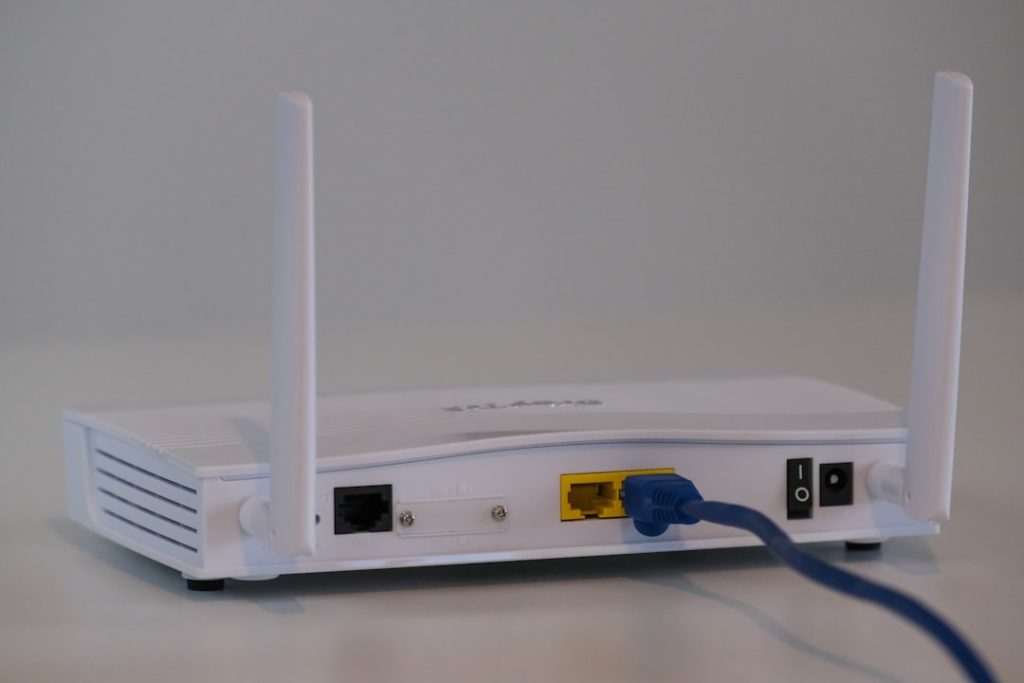
Wireless routers may not capture headlines, but the monthly rental fees of $10 to $15 that internet service providers charge can accumulate to hundreds of dollars annually. With approximately 71% of American households opting to lease equipment from their ISP rather than purchasing their own, consumers are missing significant savings opportunities. The router serves as the central hub connecting all devices to the internet, directly impacting every online activity in the home.
According to Gianmarco Chumbe, the laboratory engineer responsible for router evaluation protocols, the device functions as the core of home networking infrastructure. He explains that similar to how the cardiovascular system distributes essential nutrients throughout the body, routers distribute data to connected devices, and poor-performing equipment can severely compromise the entire network experience.
Network connectivity issues plague most households, with recent survey data indicating that 86% of Americans encounter wireless signal drops, while 19% report these interruptions occur frequently or daily.
The emergence of Wi-Fi 7 technology has dominated router marketing over recent years, though distinguishing genuine performance improvements from promotional claims remains challenging for consumers. Laboratory testing provides definitive answers about whether this latest standard delivers meaningful advantages over previous Wi-Fi generations.
Performance Analysis Confirms Superior Speed Capabilities
Comprehensive testing demonstrates that Wi-Fi 7 routers significantly outperform earlier generations across all measured parameters. These devices achieved combined throughput scores of 3,169 Mbps across all frequency bands, compared to 1,309 Mbps recorded by Wi-Fi 6E models.
While the addition of the 6GHz frequency band contributed to these improvements, Wi-Fi 7 maintains substantial performance advantages even when compared to Wi-Fi 6E routers that also support this spectrum. The enhanced capabilities stem from several technological advances unique to the newest standard.
David Coleman from Extreme Networks highlights that Wi-Fi 7 introduces 320MHz-wide channels, effectively doubling the data pathway capacity compared to Wi-Fi 6E limitations. This expansion, combined with Multi-Link Operation functionality and 4K-QAM modulation techniques, can boost transmission efficiency by up to 20% over previous standards.
Distance testing reveals another significant advantage, with Wi-Fi 7 routers maintaining 515 Mbps average speeds at 50-foot distances across all bands, substantially exceeding the 383 Mbps achieved by Wi-Fi 6 devices. These results demonstrate real-world performance benefits beyond theoretical specifications.
Laboratory awards recognize the top-performing devices in specific categories based purely on measured performance data. The fastest routers in each category include the Netgear NightHawk RS700S for Wi-Fi 7, TP-Link Archer AXE75 for Wi-Fi 6E, TP-Link DECO X55 Pro for Wi-Fi 6, and Netgear Orbi 970 for mesh systems.

Secondary Metrics Show Mixed Results
While Wi-Fi 7 excelled in speed measurements, secondary performance indicators like jitter and packet loss showed less dramatic improvements. Most routers across all standards achieved acceptable jitter scores below the 1-millisecond threshold, with only occasional exceptions exceeding this benchmark.
Packet loss results proved more variable, with no wireless standard consistently achieving the ideal sub-1% rate on 5GHz frequencies. For applications requiring minimal packet loss, such as online gaming, manually selecting alternative frequency bands may provide better performance.
Dual-Band Wi-Fi 7 Models Offer Limited Value
Marketing strategies have led to the introduction of dual-band Wi-Fi 7 routers that lack access to the crucial 6GHz frequency band. Testing reveals these products fail to deliver the primary benefits associated with the Wi-Fi 7 standard, performing comparably to older Wi-Fi 6 devices while commanding higher prices.
The two most affordable Wi-Fi 7 options tested, both priced around $100, exemplify this limitation by supporting only 2.4GHz and 5GHz bands. While these devices incorporate some Wi-Fi 7 features like Multi-Link Operation and advanced modulation, they miss the most significant performance enhancement.
Performance data clearly demonstrates that tri-band Wi-Fi 7 routers, which include 6GHz capability, occupy the highest performance tier. The Netgear NightHawk RS700S exemplifies this advantage with throughput scores of 4,346 Mbps: 92 Mbps on 2.4GHz, 1,586 Mbps on 5GHz, and 2,668 Mbps on 6GHz.
Comparative analysis shows dual-band Wi-Fi 7 routers clustering with Wi-Fi 6 devices in performance charts, with some dual-band models actually delivering inferior results while commanding premium pricing. Even high-performing Wi-Fi 6 devices like the TP-Link Deco X55 Pro outperformed most dual-band Wi-Fi 7 routers at significantly lower costs.
Cost Analysis Reveals Improving Value Proposition
Initial Wi-Fi 7 router pricing approached $1,000 when first introduced, but current market conditions show substantial price reductions. While budget options under $100 exist, most are dual-band models with limited capabilities.
Current average pricing shows Wi-Fi 7 routers at $293, compared to $124 for Wi-Fi 6E, $178 for Wi-Fi 6, and $53 for Wi-Fi 5 models. Despite the premium, value analysis using price-per-Mbps calculations reveals competitive positioning for top-performing Wi-Fi 7 devices.
The TP-Link Archer BE550, priced at $200, achieved exceptional value scores with 3,269 Mbps combined throughput: 127 Mbps on 2.4GHz, 1,259 Mbps on 5GHz, and 1,882 Mbps on 6GHz. This performance exceeded several routers costing twice as much.

Value analysis suggests Wi-Fi 6 routers no longer represent optimal purchases, as performance limitations outweigh cost savings when considering future device compatibility. Notable exceptions include specific models like the TP-Link Deco X55 Pro and Archer AX21, which offer acceptable performance at attractive price points.
Device Compatibility Considerations
Maximizing Wi-Fi 7 router capabilities requires compatible devices that support the standard’s advanced features. Recent smartphone releases, including Google Pixel 8 and 9 series devices and Microsoft Surface laptops, incorporate Wi-Fi 7 compatibility.
Some implementations offer partial support, such as iPhone 16 and 17 series devices that technically support Wi-Fi 7 but limit channel width to 160MHz rather than the full 320MHz specification that delivers maximum performance gains.
Future-Proofing Justifies Investment
Current data consumption trends support investing in higher-performance networking equipment. Recent analytics show average household monthly usage reached 767GB in late 2025, representing a 69GB increase from the previous year. Industry experts predict this trajectory will soon cross the terabyte threshold.
Historical context emphasizes the rapid pace of bandwidth growth, with recent annual increases matching total usage levels from 12-15 years ago. Wi-Fi 6 equipment appears inadequate for anticipated future demands, while Wi-Fi 7 technology provides the performance headroom necessary for long-term viability.
Quality tri-band Wi-Fi 7 routers now available under $200 represent reasonable investments for network infrastructure that should remain capable for the next decade. The combination of improved pricing and superior performance makes upgrading from older standards increasingly justifiable.
Testing Methodology
Laboratory evaluation protocols ensure consistent, comparable results across all router models. Testing focuses on four primary performance metrics measured at multiple distances and across all available frequency bands.
Throughput measurements quantify actual data transmission capacity in Mbps at 7-foot, 25-foot, and 50-foot distances from the router. This metric removes internet service provider variables to isolate router performance capabilities.
Jitter testing measures latency variations that cause audio delays and video freezing during real-time communications. Packet loss analysis determines the percentage of data that fails to reach intended destinations, critical for applications requiring reliable data delivery.
Signal strength evaluation involves measuring broadcast quality at 61 locations throughout a 15,000-square-foot facility to simulate real-world interference conditions from walls and electronic devices. All measurements are conducted separately on each available frequency band to provide comprehensive performance profiles.
Photo by Compare Fibre on Unsplash
Photo by Dreamlike Street on Unsplash
Photo by Gavin Allanwood on Unsplash