Mediterranean Filming Locations That Brought Homer’s Odyssey to Life in Christopher Nolan’s Epic
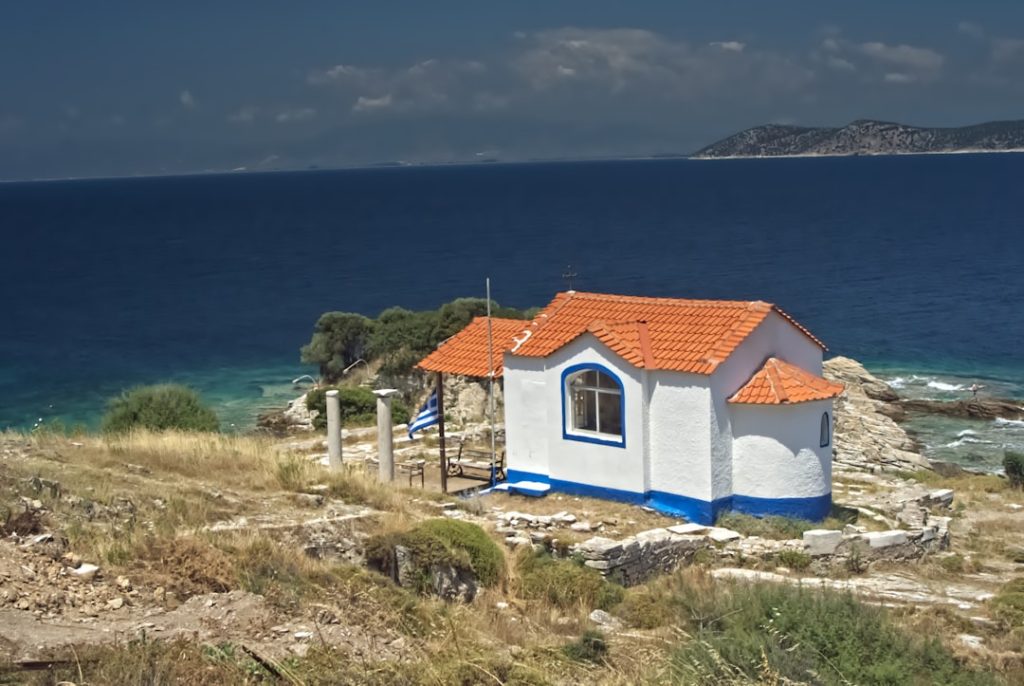
The Mediterranean’s most breathtaking landscapes have served as the stunning backdrop for Christopher Nolan’s latest cinematic venture – a new adaptation of Homer’s timeless epic, The Odyssey. From the pristine shores of Greece to the volcanic islands of Sicily, these authentic locations bring three millennia of storytelling to vivid life on the silver screen.
Nolan’s production team carefully selected filming sites across Greece and Italy that capture the mythic grandeur of Odysseus’ legendary voyage home from Troy. The choice of these Mediterranean settings reflects not only their visual splendor but also their deep historical connections to the ancient world that inspired Homer’s masterpiece.
Greece’s Cinematic Renaissance
The production highlights Greece’s emergence as a premier filming destination, supported by attractive government incentives that have drawn major international projects. Recent high-profile shoots include Brad Pitt’s work on Hydra and in Athens, with additional productions featuring Daniel Craig and Michelle Williams planned for Corfu.
Voidokilia Beach: A Perfect Crescent of Myth
Located in Messinia on the Peloponnese peninsula, Voidokilia Beach creates an almost supernatural horseshoe of golden sand meeting the tranquil Ionian waters. This remarkable natural formation provided filmmakers with a landscape that appears divinely crafted, perfectly matching the mythical tone of Homer’s narrative.

The surrounding region holds special significance in the original epic, as it’s where Telemachus, Odysseus’ son, journeys to seek information about his missing father from the wise King Nestor. Visitors can stay at the luxurious Mandarin Oriental Costa Navarino, which offers specialized Odyssey-themed excursions.
Nestor’s Cave: A Windswept Sanctuary
High above Voidokilia Beach, this dramatic cave carved into coastal cliffs offers sweeping views of the Ionian Sea. While not explicitly mentioned in Homer’s text, local tradition connects it to King Nestor as a refuge for travelers seeking counsel. The cave’s elemental setting captures the raw power of nature that permeates the ancient epic.
Fortresses Worthy of Heroes
Methoni Castle, a massive Venetian fortress extending into the sea on a rocky peninsula, provided one of the production’s most visually striking locations. Though built centuries after the Bronze Age setting of The Odyssey, its imposing sea-facing walls and isolated position evoke the fortified strongholds described in Homer’s verse.
Similarly, Acrocorinth, one of Greece’s largest hilltop citadels, offered filmmakers the monumental scale needed to convey the epic’s grandeur. This ancient fortress, continuously fortified through Byzantine, Venetian, and Ottoman periods, includes the mysterious Peirene spring that has never run dry.

The Authentic Home of Odysseus
While not featured in filming, the island of Ithaca remains the traditional birthplace of Odysseus according to scholarly consensus. This peaceful Ionian island offers visitors forest-covered hills descending to quiet harbors, including the Polis Cave where archaeologists discovered bronze tripod fragments matching those described in Homer’s epic.
Nearby Kefalonia presents an alternative theory, with some scholars arguing its dramatic geography of towering peaks, underground lakes, and expansive beaches better fits Homer’s descriptions. The island’s Melissani Cave and Myrtos Beach provide landscapes truly worthy of mythic storytelling.
Sicily’s Volcanic Drama
The production extended to Sicily’s surrounding islands, where the rugged Egadi Islands and volcanic Aeolian archipelago provided suitably dramatic Mediterranean backdrops. Favignana, known locally as “Goat Island,” intrigues historians as a possible inspiration for Homer’s goat-rich island where Odysseus lands during his journey.
The Aeolian Islands, with their active volcanoes, black sand beaches, and sheer cliffs, embody the elemental forces of fire, sea, and wind that drive the epic’s narrative. Ancient writers connected these islands to Aeolia, the floating realm of the wind god Aeolus who aids Odysseus in his voyage.
These carefully chosen locations demonstrate how the Mediterranean’s timeless landscapes continue to inspire storytellers, creating a bridge between ancient myth and contemporary cinema that allows modern audiences to experience the world that has captivated readers for nearly three thousand years.
Photo by Gábor Kárpáti on Unsplash
Photo by Po-Hsuan Huang on Unsplash
Photo by Alexander Korte on Unsplash